Fallout From the Text Message Scandal. Was There a Cover-Up at the Highest Levels of Wenatchee Valley College?
“Non-conversation if it wasn’t released,” the meeting notes quote WVC’s president as saying. Two trustees resigned, and the college fired its chief of staff.
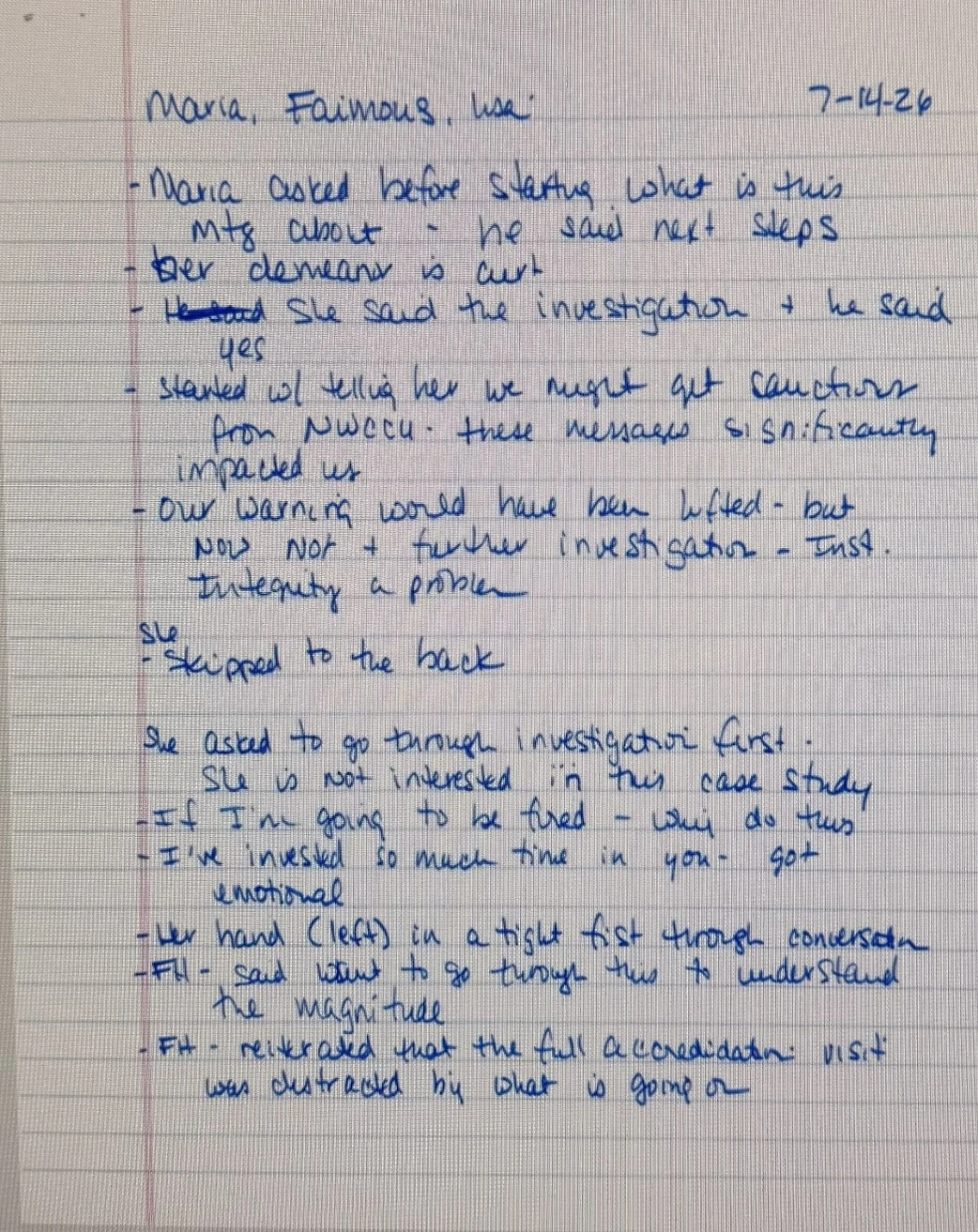
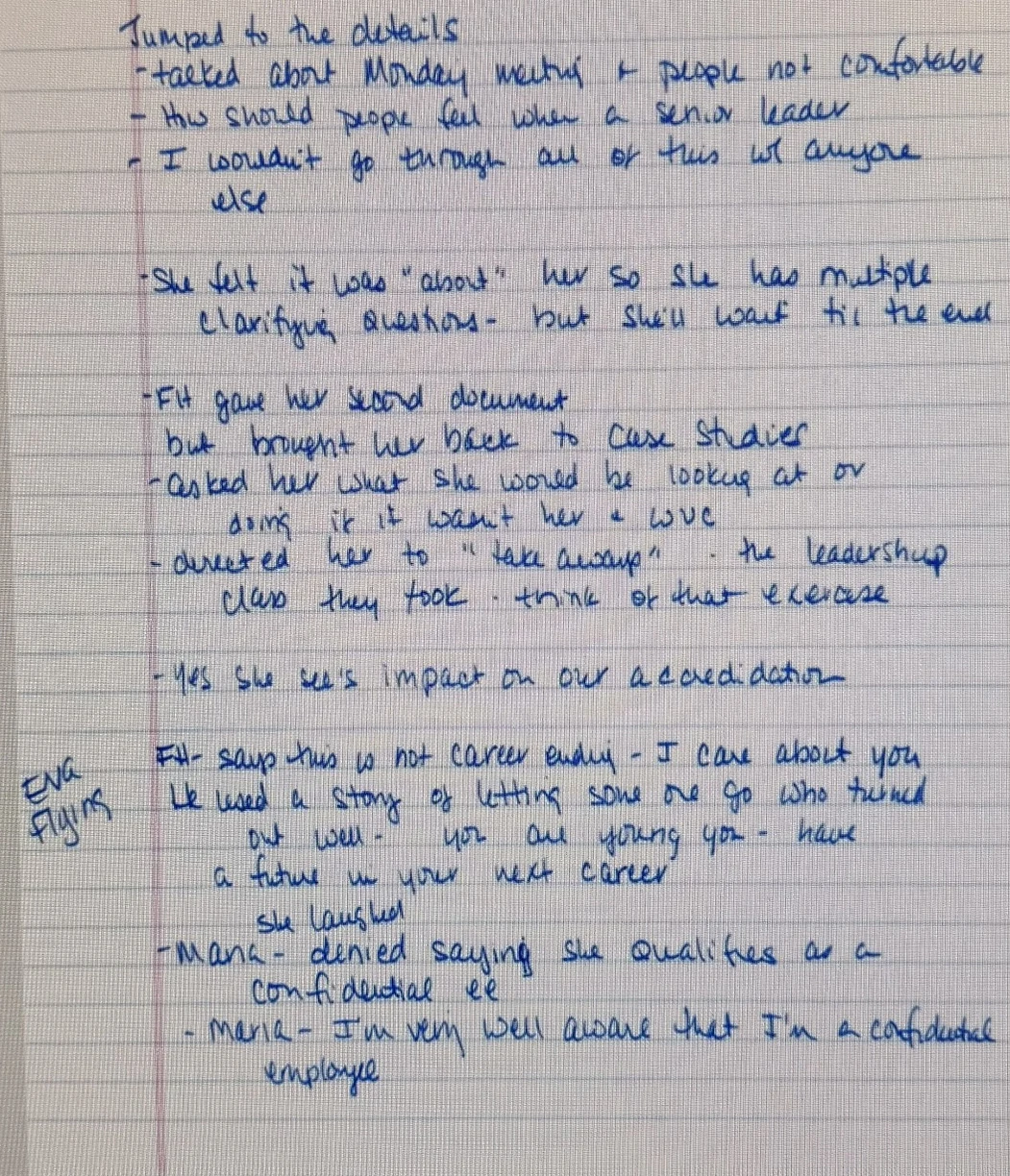
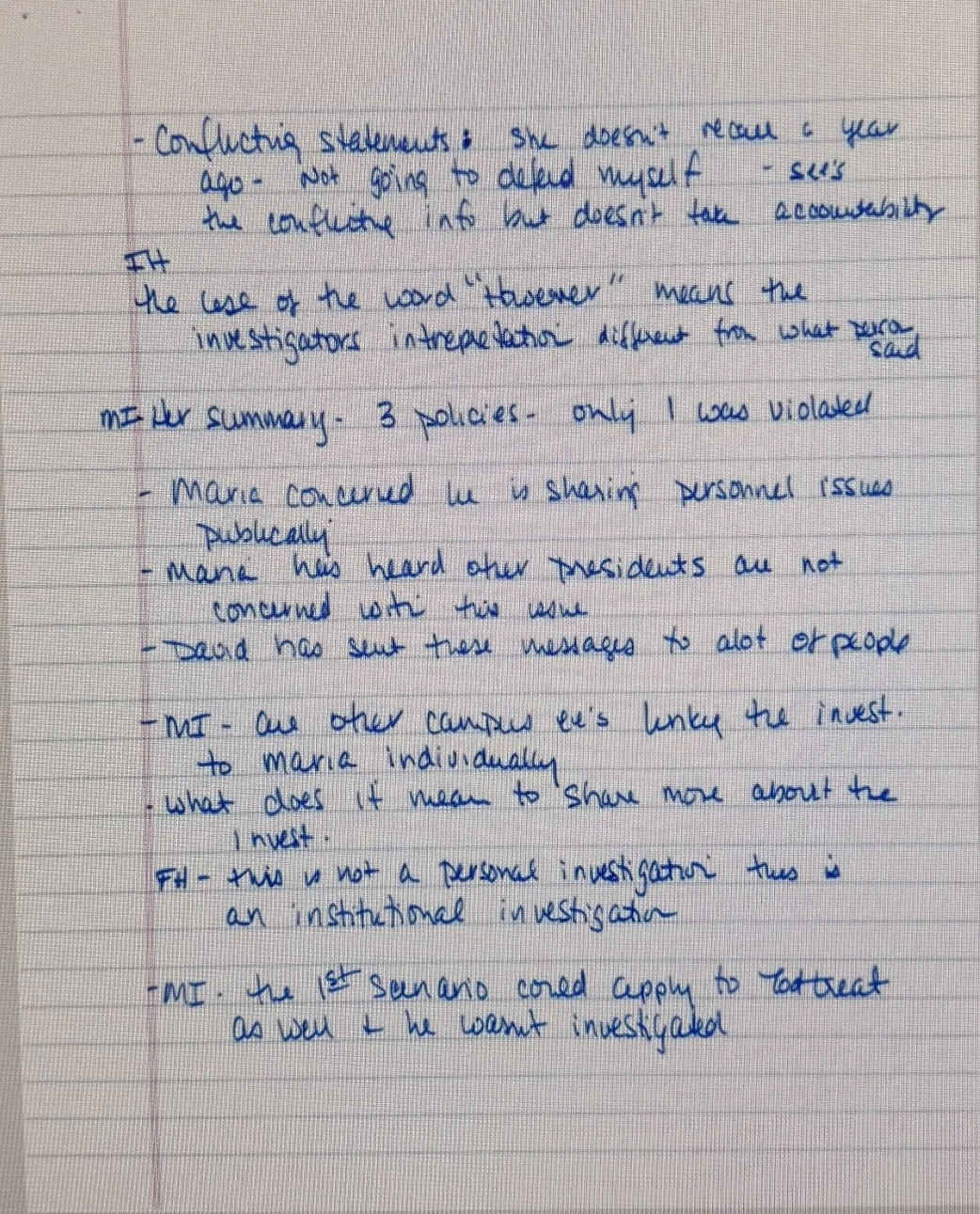
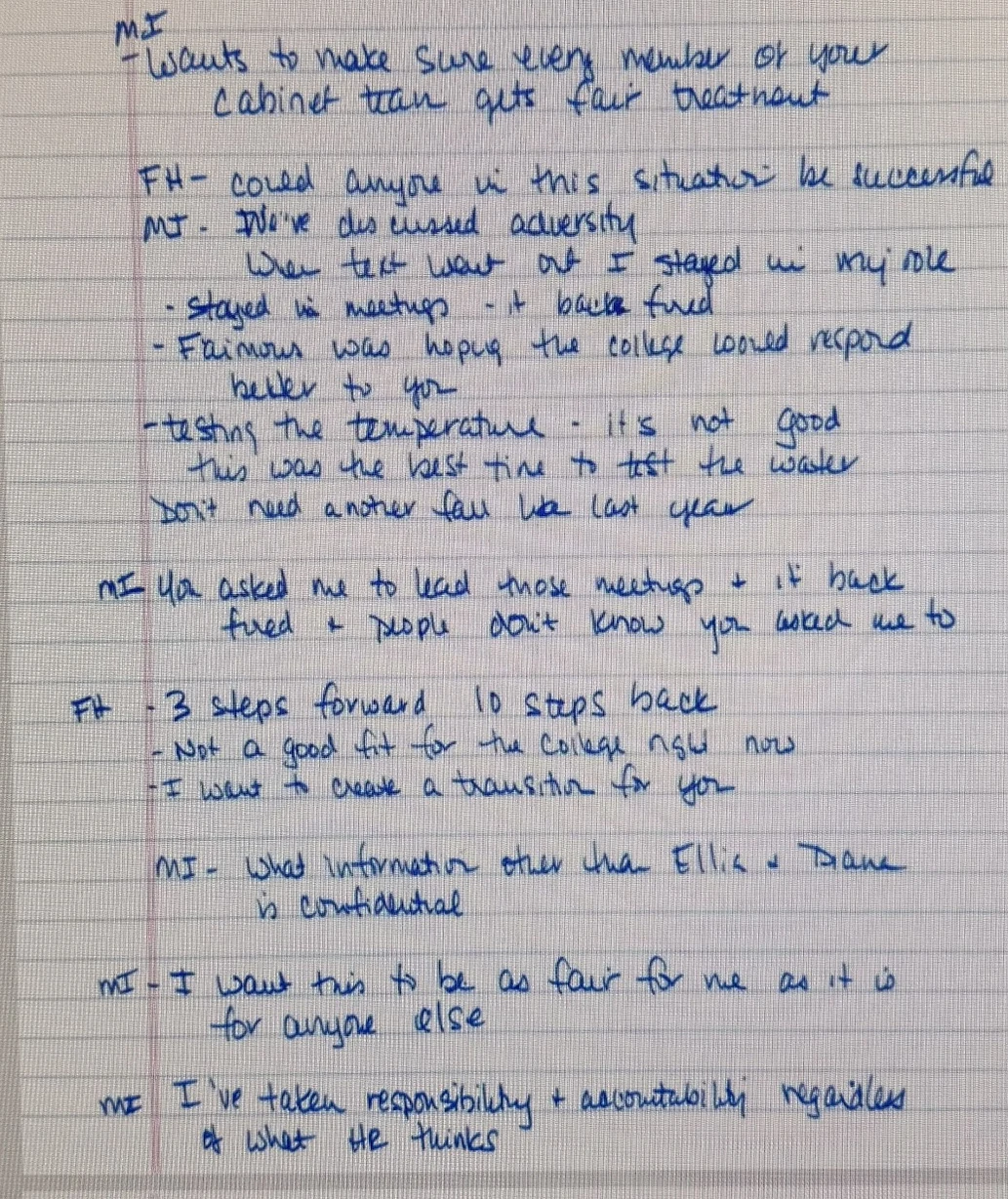
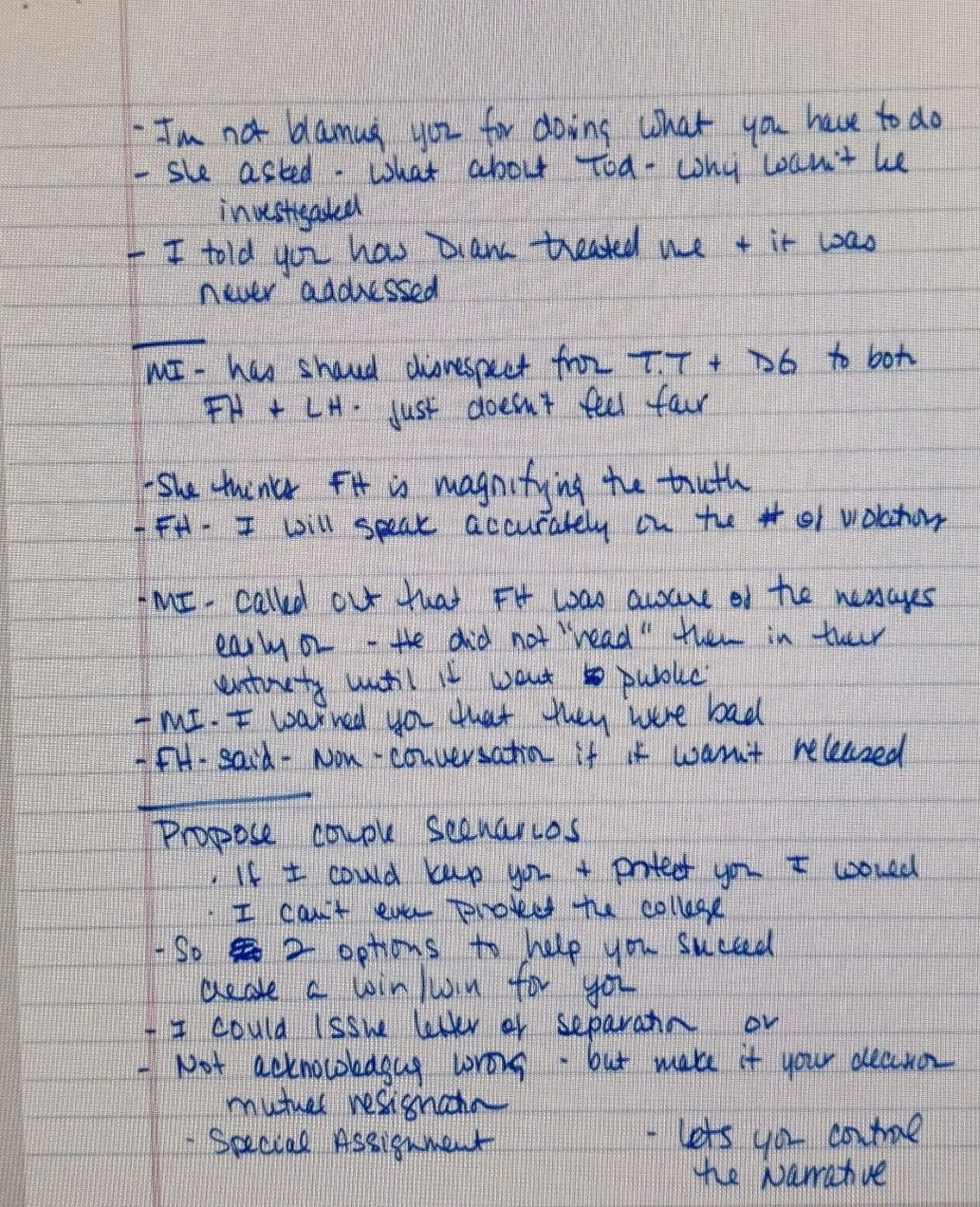
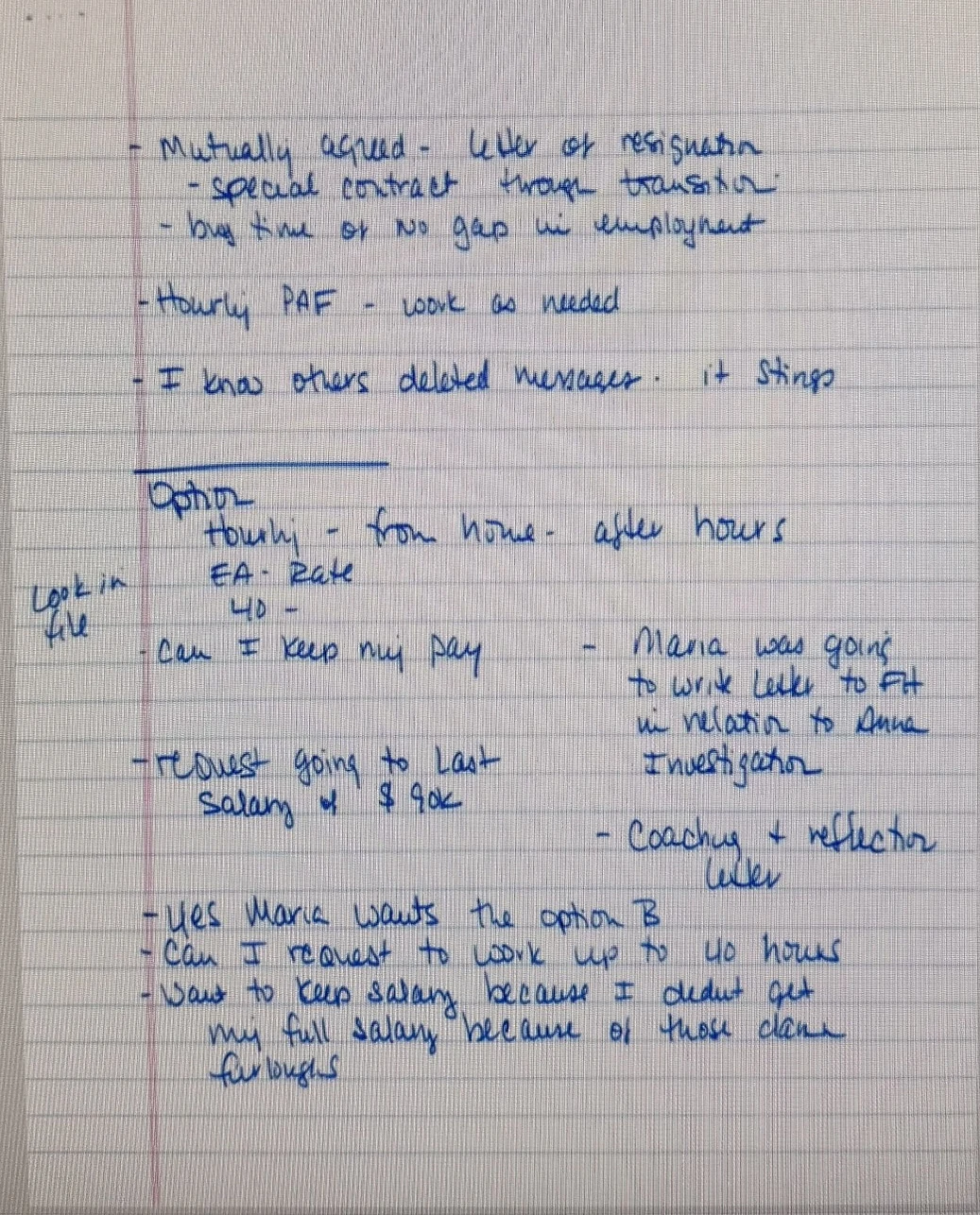
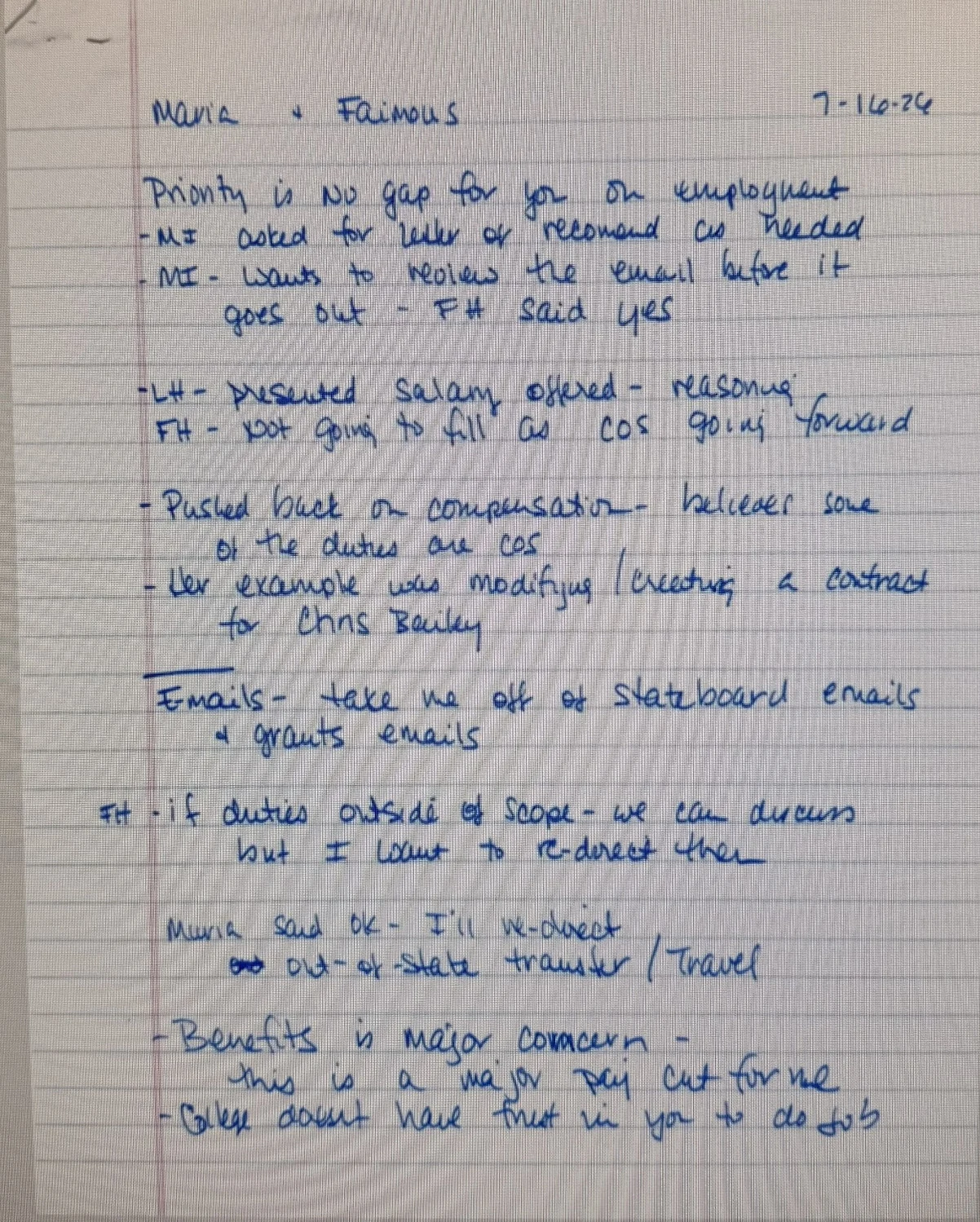
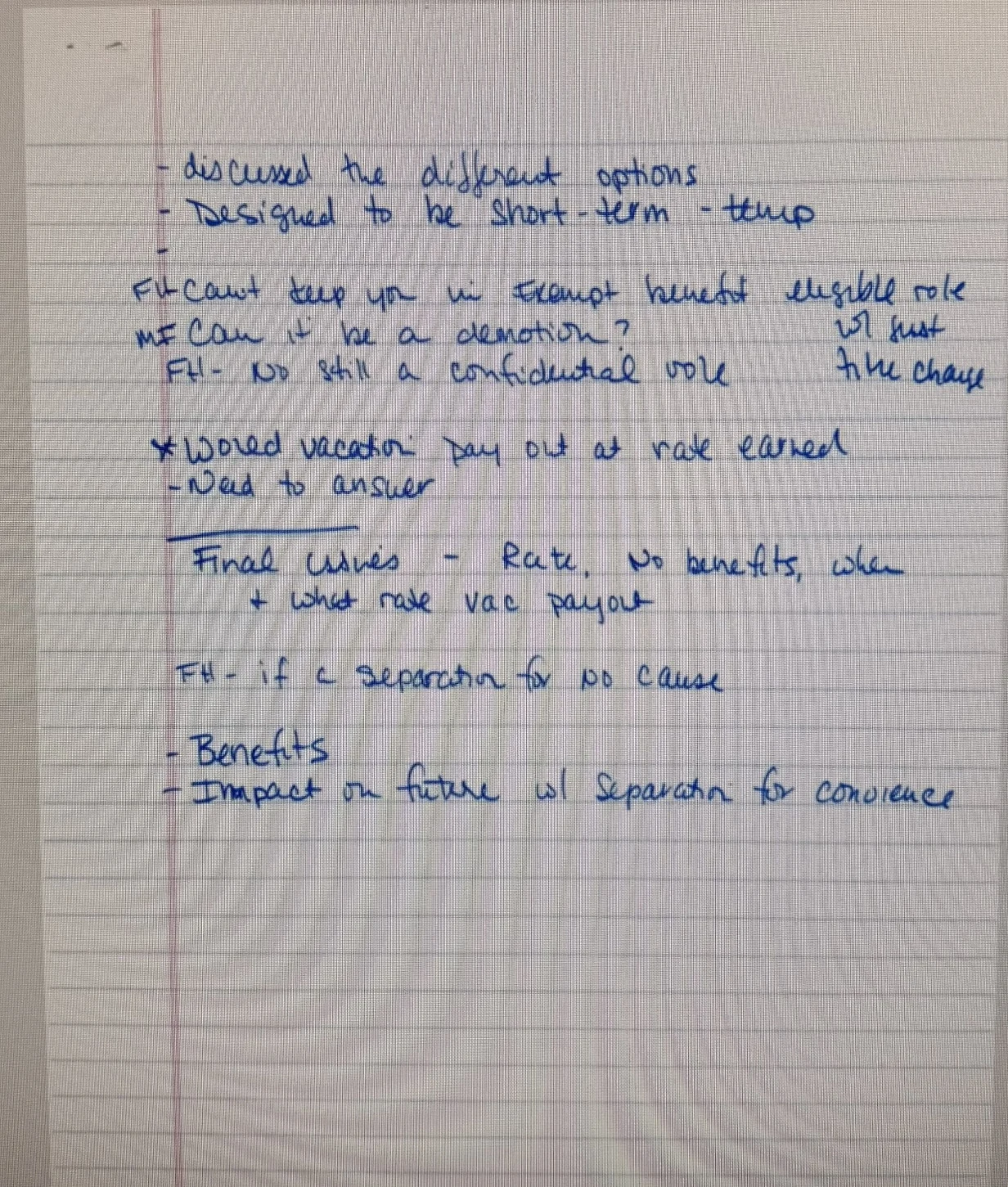
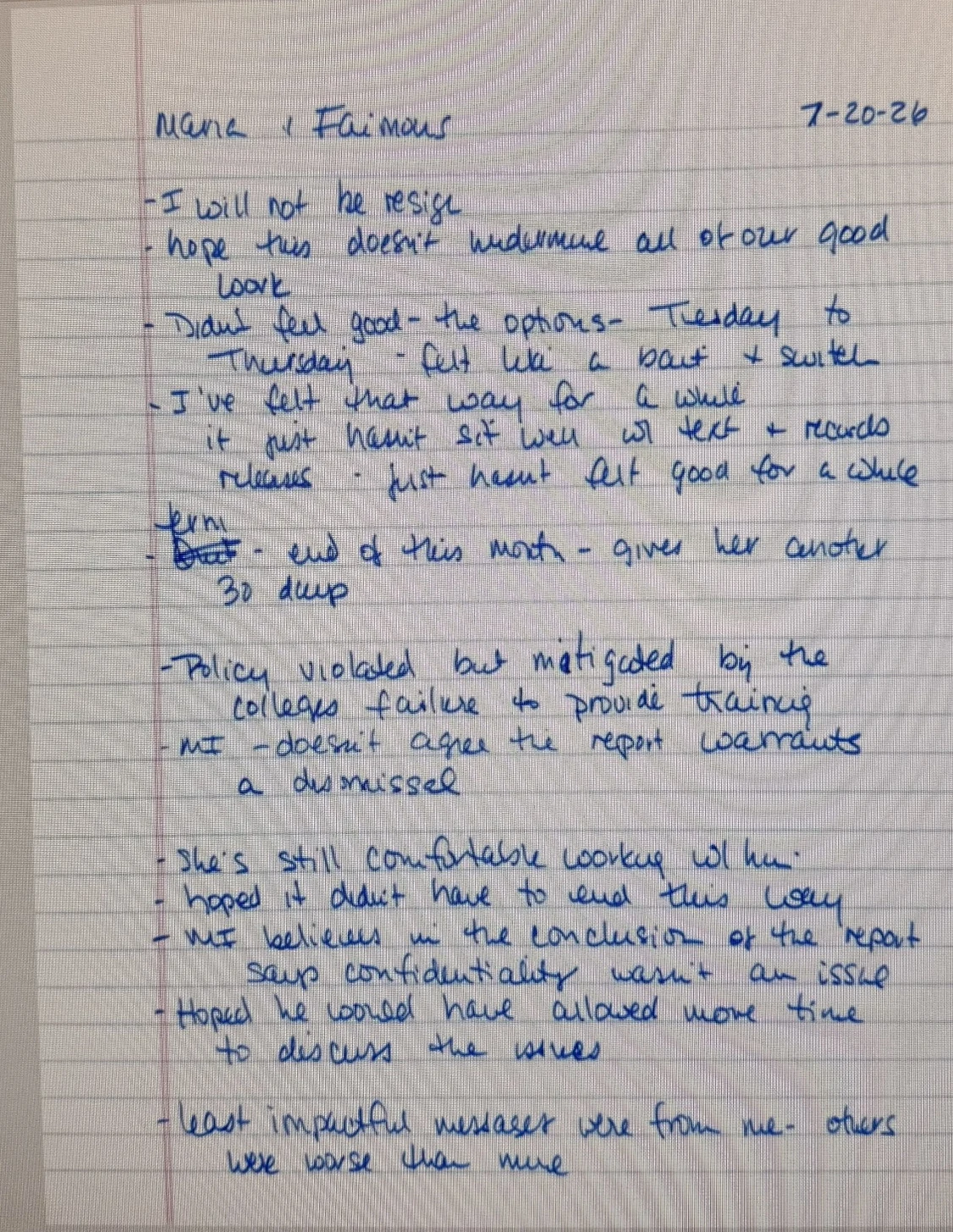
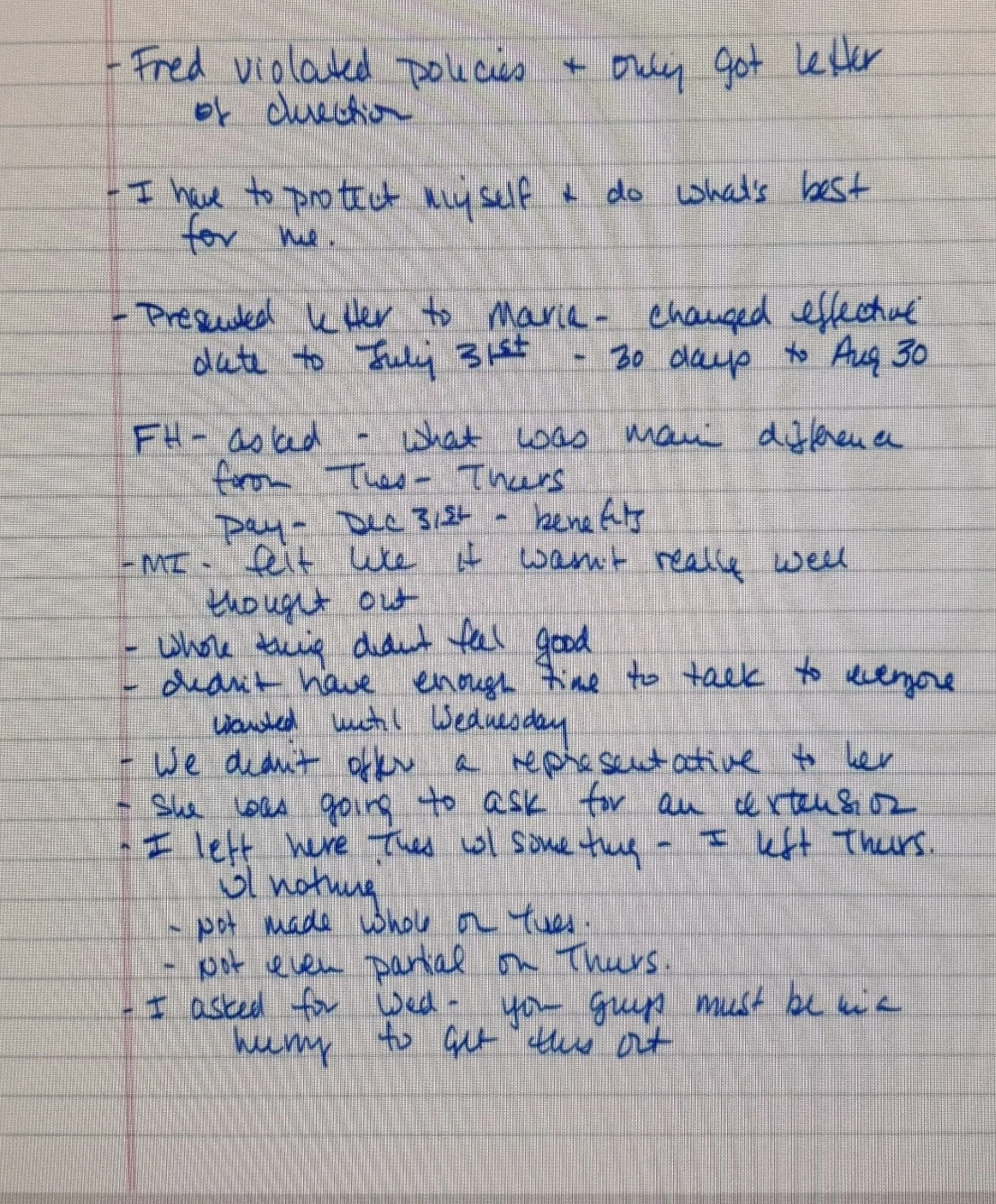
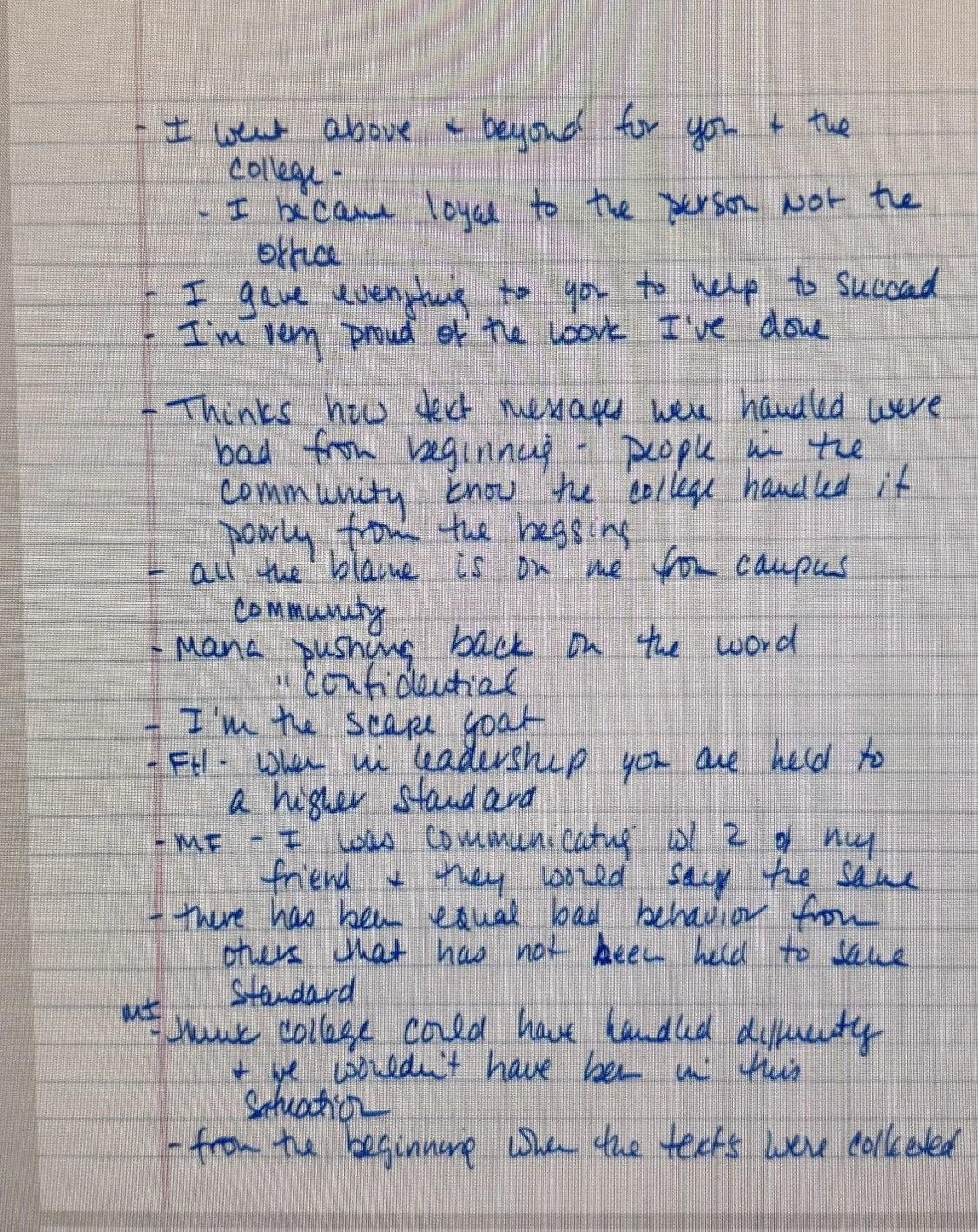
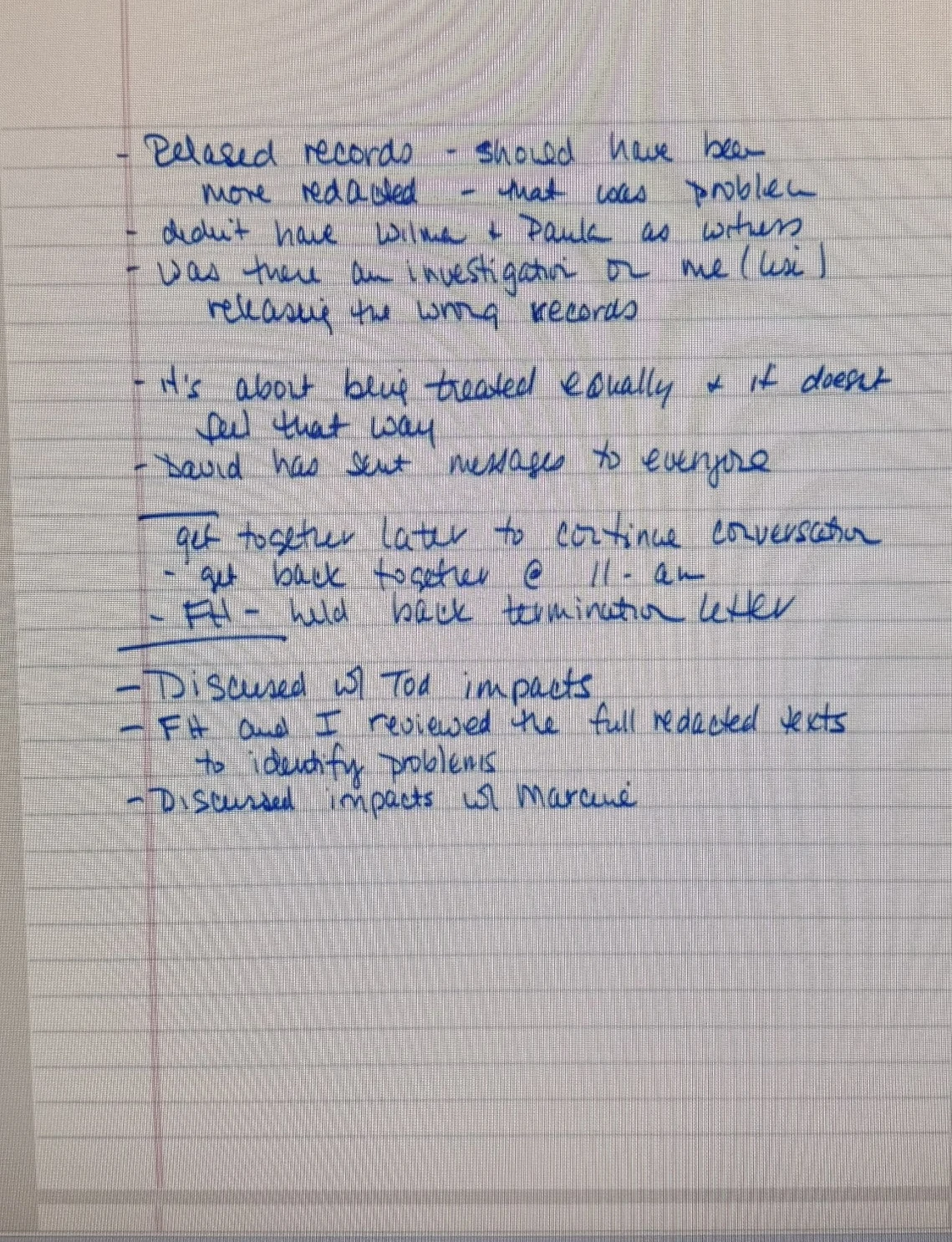
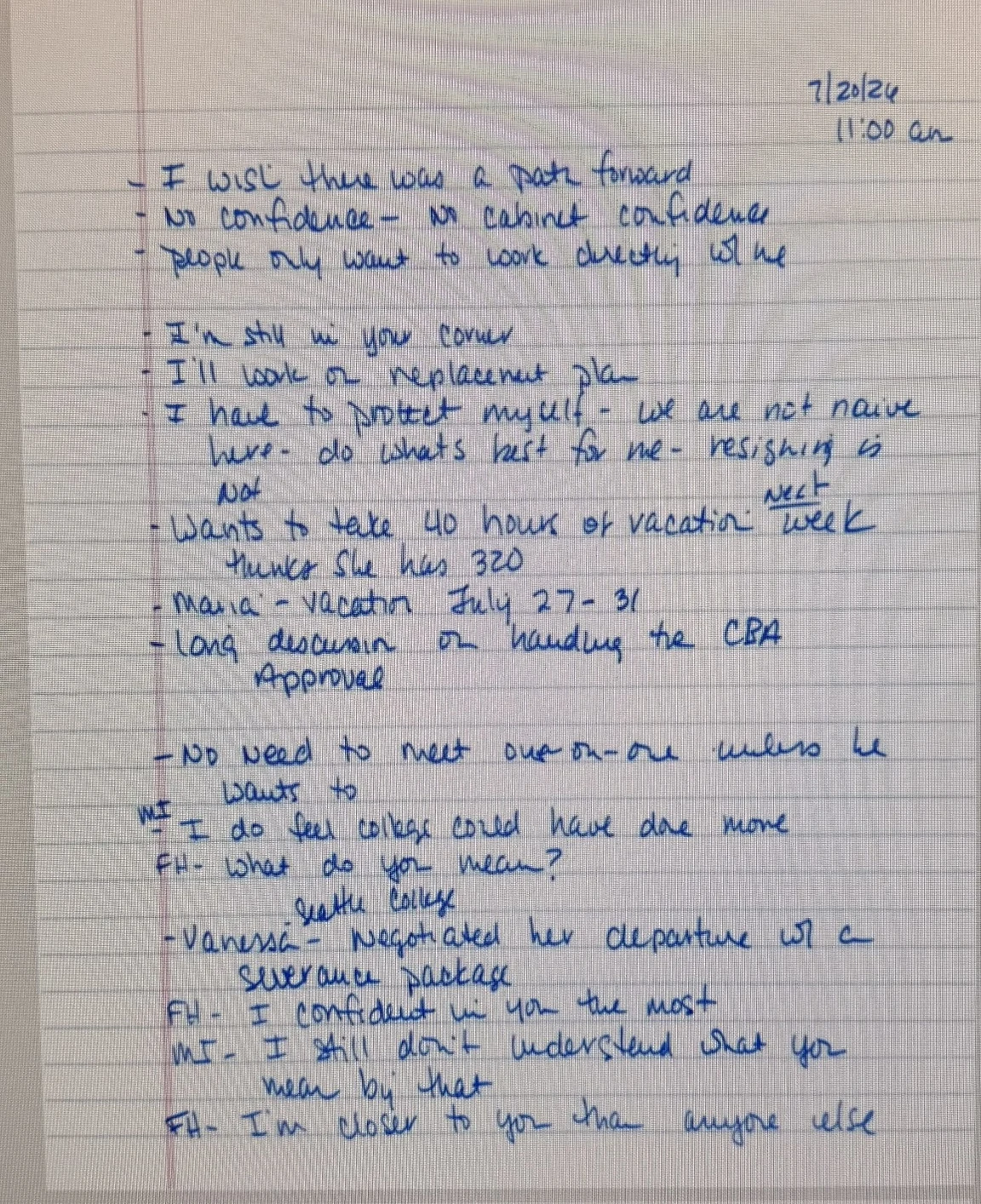
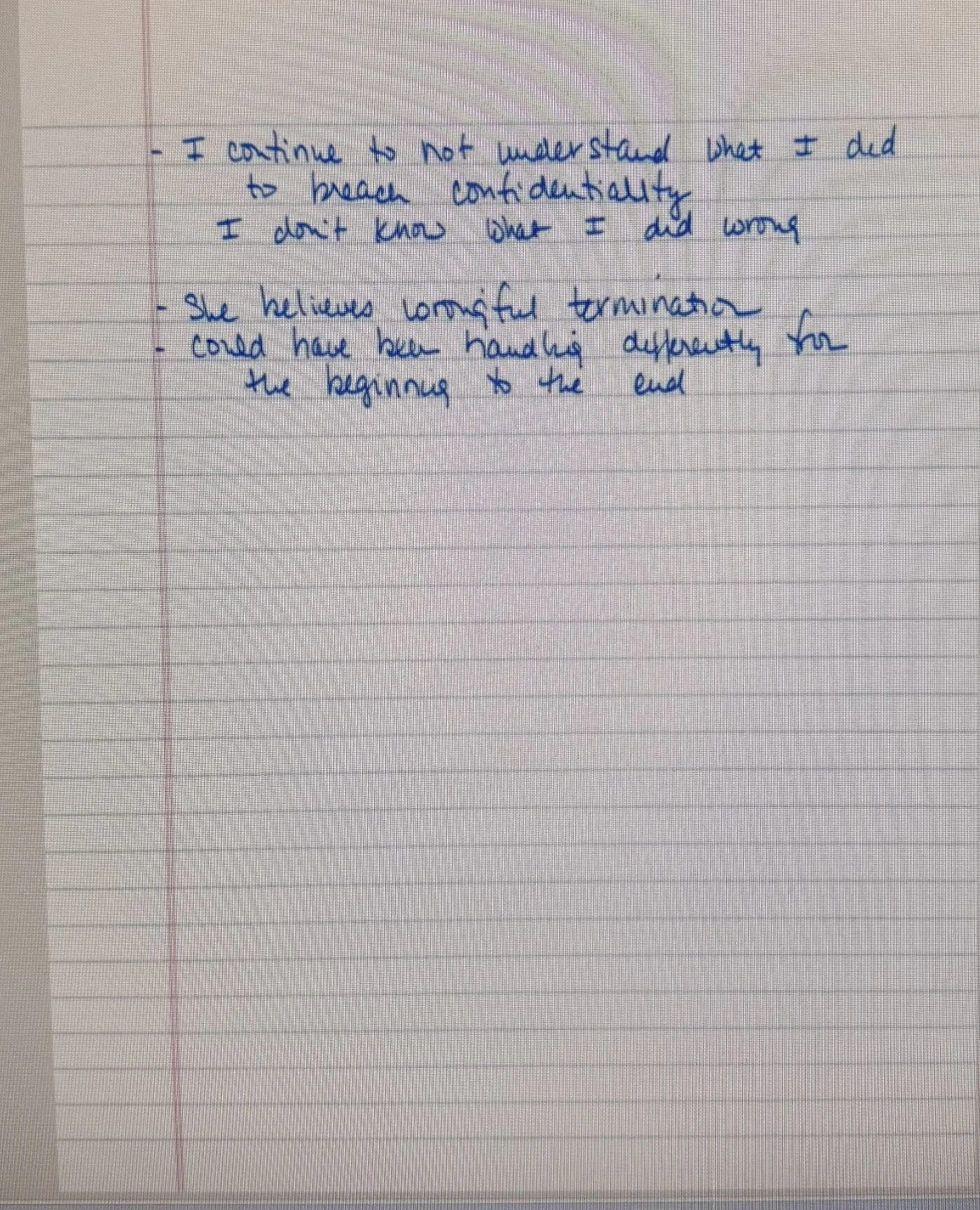
The WVC Blog obtained 14 pages of handwritten notes after asking Wenatchee Valley College for records showing how and why it ended Maria Iñiguez’s employment. The notes appear to document a series of meetings between WVC President Faimous Harrison and Iñiguez, then the college’s chief of staff. They describe discussions about the release of texts from her phone, the fallout for the college, and what WVC was considering for her future.
In a June 25 letter, WVC President Faimous Harrison told María Iñiguez that communications she had engaged in as a college employee may have violated policies on freedom of inquiry and expression, ethical conduct, or workplace civility. He hired outside attorney Erin McCool to investigate and placed Iñiguez on paid administrative leave effective June 26, 3 days after her text messages were released on social media. Harrison described the leave as non-disciplinary and directed her to work from home, continue her regular duties, and refrain from discussing the investigation with other WVC employees except him. He expected the investigation to conclude by July 13.
A typed document released alongside the notes, titled Intent vs. “Impact,” describes concerns about staff morale, trust in college leadership, and possible consequences for WVC’s accreditation. The handwritten account of the first meeting records Harrison raising the possibility of sanctions from the college’s accreditor, NWCCU. Iñiguez asked to go through the investigation first. The results of the investigation are available upon request from the WVC Blog.
The July 14 notes record Harrison saying, “these messages significantly impacted us,” as he raised the prospect of accreditation sanctions. Later in the same meeting, the notes record him saying, “I wouldn’t go through all of this w/ anyone else.”
“I warned you that they were bad” - says María Iñiguez to Harrison
According to the notes, Iñiguez said Harrison knew about the messages early on but had only read them in full after they became public. The note-taker recorded her telling him, “I warned you that they were bad.” The very next line attributes this response to Harrison.
“Non-conversation if it wasn’t released.”
Wait a minute! What did Harrison just say? “Non-conversation if it wasn’t released.”
Work-related texts can be public records under Washington law, even on a personal phone. Iñiguez turned over her texts for WVC to review in response to a public records request. The college released them. Would Harrison have been discussing her departure if those same texts had stayed private or been deleted? Was Harrison suggesting that she should have withheld the texts from the college or deleted them?
The notes also record Iñiguez saying, “I know others deleted messages. it stings.”
Four trustees signed declarations saying they had no responsive records. Yet texts obtained through public records requests show all four took part in college-related exchanges. Copies kept by other participants give WVC specific messages to look for on each trustee’s side of those conversations. What did WVC do to find out whether those exchanges fell within the request and what happened to the trustees’ copies?
The notes say Harrison offered Iñiguez two options. WVC could send her a letter telling her that the college was ending her employment. Or she could agree to resign and take a temporary assignment to give her more time or help her avoid a gap in employment. The notes also record Harrison saying, “I can’t even protect the college.” Next to the temporary assignment, the note-taker wrote, “lets you control the narrative.”
As they discussed the temporary assignment on July 14, the notes say Iñiguez asked whether she could work up to 40 hours and keep her salary. She said she had already missed out on part of her pay because of “those damn furloughs.”
At the July 16 meeting, the notes list avoiding a gap in Iñiguez’s employment as a priority. She asked for a letter of recommendation if she needed one and asked to review the email announcing her departure before it went out. Harrison agreed to let her review it.
The notes say Lisa Harger presented the proposed salary and explained the reasoning behind it. Harrison said he did not plan to fill the chief of staff position going forward. Iñiguez pushed back on the pay because she believed some of the proposed duties were still chief of staff work. She gave creating or modifying a contract for Chris Bailey as an example and asked to be taken off State Board and grant emails. Harrison said they could discuss duties outside the scope of the assignment and that he wanted to redirect them.
Iñiguez asks who else was held accountable
Iñiguez called herself the “scapegoat.” According to the meeting notes, she said the campus community blamed her for how the college handled the text messages and that others who had behaved just as badly were held to a different standard. Harrison replied:
“When in leadership you are held to a higher standard.”
Iñiguez asked why Vice President of Instruction Tod Treat hadn’t been investigated and told Harrison, “I want this to be as fair for me as it is for anyone else.” She also pointed to Fred Neghabat, who she said had violated college policies and, at that point, received only a letter of direction.
The notes also record that the college’s failure to provide training was considered a mitigating factor and that Iñiguez disputed whether the investigation report warranted dismissal.
A college insider told the WVC Blog that within six months of Faimous Harrison taking office, senior administrators had identified a need for training on board governance, public records and open meetings. The insider said one concern was that board discussions continued after meetings had formally adjourned. Who was told about those concerns, and what training did the college provide before the text-message scandal?
The July 20 notes record Iñiguez saying, “I will not be resign.” They also record her telling Harrison “I became loyal to the person not the office” and “I gave everything to you to help to succeed.”
The July 20 notes say the released records “should have been more redacted.” The notes also say Vanessa, a Title V director, negotiated a severance package when she left. The circumstances of her departure are unclear, although college insiders say she left because of job-related stress.
Iñiguez had turned over her texts for the college’s public records response. She refused to resign, and WVC fired her. Did the public release of those texts cost Iñiguez her job? And what did WVC do when she said others had deleted theirs?
What did WVC do to verify the trustees’ searches?
Neghabat wrote in a signed declaration that his practice was to delete all texts at the end of each workday. Read Neghabat’s declaration.
WVC Board Chair Tamra Jackson and Trustee Phylicia Hancock Lewis were among the four trustees who signed declarations. Jackson and Hancock Lewis said they had searched their personal devices or accounts and possessed no responsive records. Did WVC compare the surviving messages with all four declarations and follow up with each trustee? Were any copies deliberately deleted to keep the public from seeing what college officials said or did?
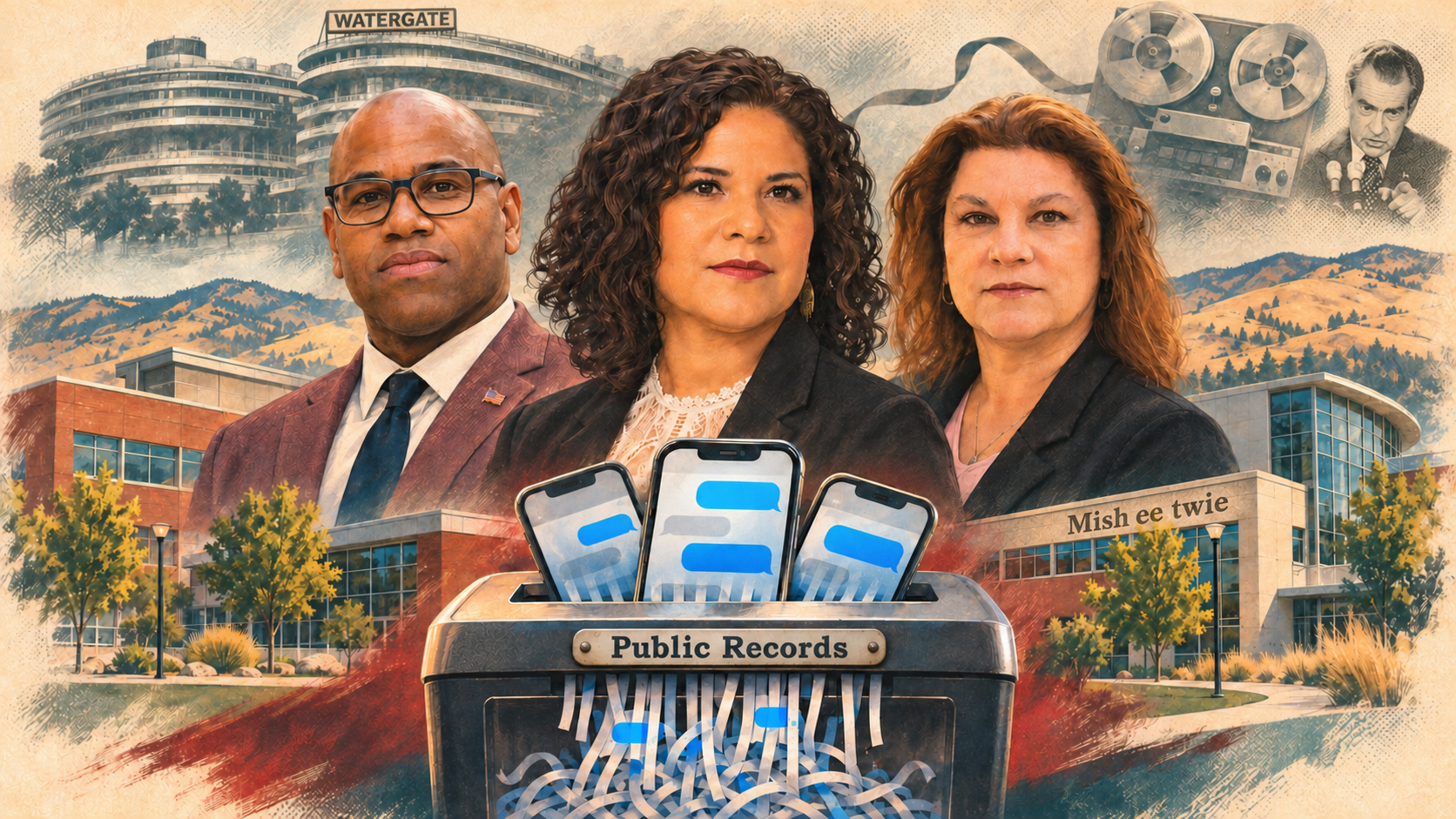
Watergate began in 1972 with a break-in at Democratic National Committee headquarters in Washington, D.C. As investigators looked into the White House’s connection to the burglary, the fight over access to President Richard Nixon’s recordings became central to the case. When the tapes were turned over, they revealed that Nixon had helped plan the cover-up. Read the U.S. Senate’s account of the Watergate investigation.
At WVC, the trail runs through text messages and handwritten notes. Iñiguez said others had deleted messages, and copies preserved elsewhere give the college specific exchanges to look for. Whether anyone deliberately concealed records remains an open question. The college’s account of where it looked, what it found, and how it followed up on Iñiguez’s allegation could help answer it.
A recent Chelan County Superior Court order in a separate WVC case explains what an adequate search requires. Citing Nissen v. Pierce County, Judge Ferrera explained that the agency is responsible for ensuring an adequate search. Individuals can search their own personal devices, but their sworn declarations must describe what they searched and how, in enough detail for a requester and a court to evaluate the search. See the Court of Appeals’ discussion of the Nissen standard.
The judge also cited Valderrama v. City of Snohomish in rejecting WVC’s position that it had no duty to seek work-related texts on former employees’ personal phones. She ordered WVC to contact former employees Diana Garza and Anna Fransk, ask them to search their devices, and obtain detailed sworn declarations.
Chelan County Superior Court order filed November 19, 2026, case no. 26-2-00170-04.
The order dealt with the Garza and Fransk records. The search standard it describes raises a question about the trustees’ records. What did WVC do beyond accepting their declarations? If the surviving texts fell within the request, did WVC ask where the trustees looked and whether their copies had been retained or deleted?
When deleting public records can be a crime
Work-related texts can be public records even on personal phones. Washington requires agencies to follow approved retention schedules. If an existing public record is requested while it is scheduled for destruction, the agency must preserve it until the request is resolved. Washington State Archives guidance · RCW 40.14.060 · RCW 42.56.100
Washington law treats some forms of record destruction as felonies. Deliberately and unlawfully destroying or concealing a record officially filed with, or placed in the custody of, a public office or officer under legal authority can be a Class C felony, punishable by up to five years in prison, a $1,000 fine, or both. A separate law addresses public officers who destroy or conceal records pertaining to their office. That offense is a Class B felony, punishable by up to 10 years in prison, a $5,000 fine, or both. RCW 40.16.010 · RCW 40.16.020
A college-business text can be subject to records retention rules. Whether its deletion also amounts to a crime depends on whether the particular message and the circumstances satisfy the criminal statute. That is why the details matter. Which WVC texts had to be kept, were any destroyed while they still had to be kept, and who was responsible?
Trustees Wilma Cartagena and Paula Arno Martinez resigned after the scandal broke. Several senior officials later left the college, including Diana Garza, Ellia Sablan-Zebedy, and Fred Neghabat. Iñiguez refused to resign, and WVC fired her.
The Washington State Attorney General’s Office has also been involved in recent WVC board proceedings. According to the WVC Blog’s reporting, AAG Aileen Bryson Miller has participated in board meetings and executive sessions. The Attorney General’s Office identifies Miller in its division report as a senior assistant attorney general and chief of its Education Division, which provides legal services to Washington’s community and technical colleges. Whether the board sought her advice about preserving or recovering texts remains unclear. Read the Attorney General’s Office division report.
Insiders at the college tell the WVC Blog that employees have been instructed to stop documenting conversations about college business.
If employees are told to leave college business undocumented, students, staff, and taxpayers have fewer records to check who made a decision, why they made it, and whether the college followed through. When a decision is challenged, the public has less evidence to verify the college’s account. That makes it harder to trust that the college is giving the public the full story.
In an April 22, 2026 text exchange released by WVC, faculty union president Micky Jennings told cabinet member Jennifer Hadersberger, “I have been told that texting admin is bad these days ...” Hadersberger replied, “Go for it-just keep it clean :)” Later in the same thread, Jennings asked how candid he should be with accreditation reviewers and whether he should say what was needed “to save our jobs.” Hadersberger told him to be honest. The texts give a firsthand account of what Jennings said he had been told and leave open who said it and why. Read the WVC Blog’s reporting on the exchange. View the original texts.
What else might WVC be keeping from the public?
The question for Harrison and the board is what they did when Iñiguez told them others had deleted their texts. Who was asked to search, what did they find, and did WVC hold everyone to the same standard?
Hold leadership to a higher standard
“When in leadership you are held to a higher standard,” Harrison told Iñiguez, according to the meeting notes. The Board of Trustees should apply that standard to the president, too.
Most of the people who served on the cabinet when Harrison took office have since left it. The WVC Blog estimates that only one or two of those original members still serve on the cabinet. Faculty members have voiced public opposition to renewing his contract and called for the board to end his presidency. In the WVC Blog’s view, the turnover and the questions raised by these records point back to leadership. Together they make the case for a new president who can rebuild trust with faculty, staff, and the public.
The WVC Blog is again calling on the board to end Harrison’s contract. Section VIII allows the board to terminate for cause under the conditions it sets out. Section IX also allows the board to terminate for convenience, without cause, by giving Harrison written notice. Read the contract in the board packet.
The WVC Blog calls on Washington authorities to independently investigate whether any trustee unlawfully deleted or concealed public records. The public deserves to know whether records were lost and, if so, when they disappeared and who was responsible. If investigators find evidence of a crime, the matter should be referred to the appropriate prosecutor to consider charges.
Sign the petition asking the board to end Harrison’s contract and begin a search for new leadership.
Read the handwritten meeting notes
Wenatchee Valley College released these 14 pages in response to the WVC Blog’s public records request about Maria Iñiguez’s employment.